
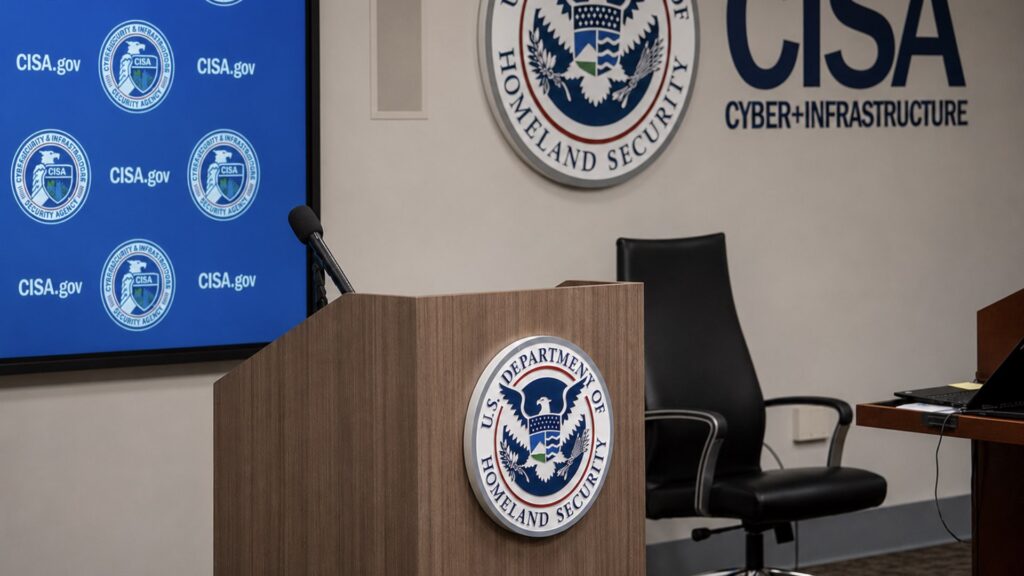
The US government’s Cybersecurity and Infrastructure Security Agency (CISA) and the Australian Cyber Security Centre have released joint guidance intended to help Critical Infrastructure (CI) firms isolate their key operational technology “in the event of disruption or crisis.”
The report, which was co-authored with the FBI, the UK’s National Cyber Security Centre and Canada’s Centre for Cyber Security, aims to ensure that any critical infrastructure that comes under attack can be successfully isolated from other vital systems, while ensuring that it can continue to “operate in isolation for an extended period.”
Dubbed ‘CI Fortify – Advice for isolating vital systems,’ the publication warns that CI operators are ripe targets for threat actors: “The sensitivity of the data stored by these entities, and the importance of their services, makes them attractive for cybercriminals seeking to extort victims via data exfiltration or by conducting ransomware attacks for disruptive or destructive purposes.”
To keep the threat actors at bay, the report set out a six-step path to help CI operators stay protected. It started with identifying the systems and networks that are essential to the critical service in question. Next, firms must pinpoint the customers of these services (such as military bodies or healthcare providers) and their requirements, including power needs in megawatts or water consumption in millions of gallons per day.
Once that’s done, CISA advises that systems should be grouped by criticality and threat exposure, after which the process of mapping every connection point between the critical infrastructure and other networks can begin. This should include links to non-critical corporate systems, untrusted networks (such as the internet), cloud environments, vendor remote access, and more. Details like the owner of each connection, its encryption type, and its business context should also be recorded.
While those steps constitute the preparation phase, step five is concerned with building separation and isolation points into your platform. These should be placed between critical and non-critical infrastructure – for instance by ensuring physical isolation of CI systems (like routers and switches) with no overlap between vital and non-vital capabilities – and can help to contain cyber-attacks before they spread further.
The final step is to create and test an isolation plan for your organization. This can be done in a progressive manner “as the cyber threat environment deteriorates,” but should still ensure that the most critical areas are fully isolated. The isolation plan must be tested on a regular basis to guarantee it can be implemented effectively. Monitoring network connections, detecting intrusions, and controlling privileged access are essential aspects of this testing process.
Organizations will also need to consider how they can continue to operate once key systems are isolated in the event of an attack, as the isolation itself can cause disruption to everyday workflows.
The report arrives at a time when state-sponsored attacks against critical infrastructure continue to expand, many with the goal of conducting espionage or laying the groundwork for disruption in the event of an international conflict.
Photo Credit: DHS photo by Zachary Hupp