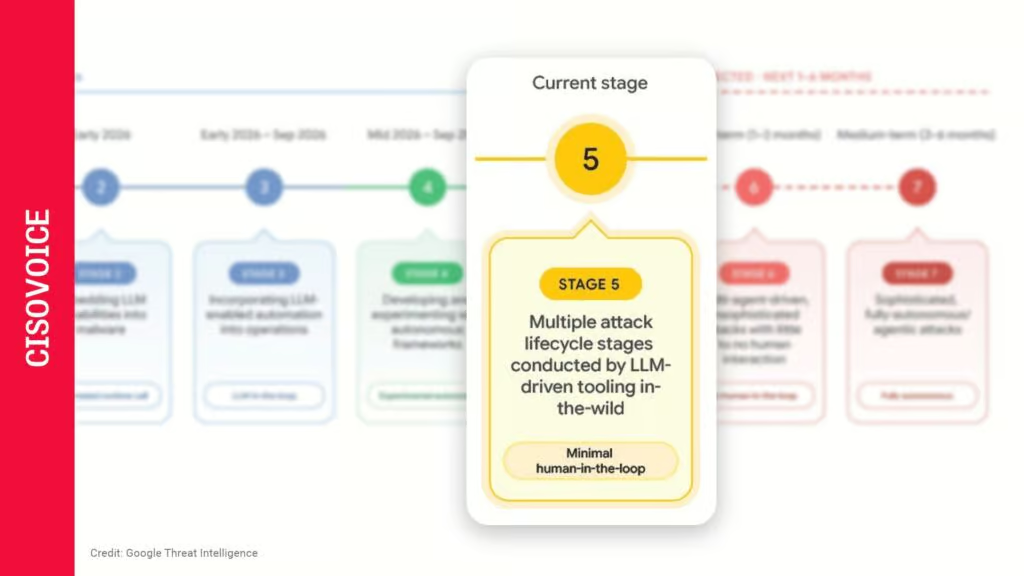
North Korean espionage group Kimsuky is now deploying artificial intelligence capabilities for scaling their operations, as experts warn that more less-sophisticated hackers are adopting AI tools for augmenting their capabilities.
Kimsuky, also known as APT43, Black Banshee and Emerald Sleet, is a North Korean hacking group known to carry out attacks against think tanks, industry and nuclear power operators for data theft.
Security firm Genians uncovered the latest campaign, dubbed Operation GitPower, in which the threat group used public GitHub repositories to spread configuration files and PowerShell scripts, but also various remote access Trojans.
“What was observed in the threat actor’s infrastructure was not merely evidence of several documents being created with AI, but a consistent process of capability development: establishing local LLM runtime environments, configuring RAG based on documents in the actor’s possession, and collecting AI agent development frameworks,” Genians said.
To carry out the attacks and use multiple AI models, the threat actors used Ollama, a tool that allows various open-source AI models to run in a local environment and supports question answering based on retrieval-augmented generation, or RAG.
Kimsuky used the application to run Msty, AI software to manage and use local and cloud-based LLMs, and another software called GPT4All.
In addition to using the applications for converting Korean speech-to-text, the attackers used RAG for document-based question answering, and to systematically collect learning materials for their AI agents and to develop a custom model.
“The threat actor did not stop at using ready-made AI applications. It also collected a large number of development components, or libraries, intended to integrate AI capabilities directly into programs under its own development.”
Escalating Use of AI
Hacking groups, specifically North Korean and Iranian nation-state attackers, are increasingly adopting AI for threat evasion and to augment their capabilities.
“Nothing has felt quite the way the last year has,” John Hultquist, chief analyst at Google Threat Intelligence Group, said while speaking at Black Hat 2026 last week. “This is a radical transformation. It is going to change the adversary and what they’re capable of, and it’s going to change the defender.”
These developments are concerning as AI developers themselves are now coming forward with claims that their advanced models can hack into other companies while bypassing safety guardrails.