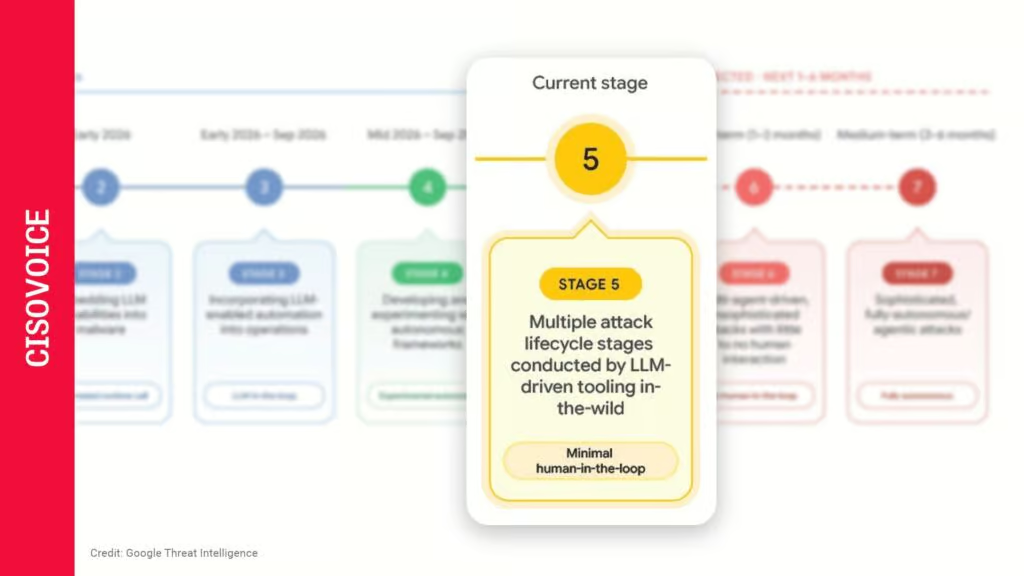

CrowdStrike has uncovered a new attack that targeted South Korean banks and successfully exfiltrated potentially damaging data from its targets. Interestingly, the cybersecurity firm noted that the threat actor’s code repositories bore evidence of AI and agentic workflows, reflecting the changing nature of cyberattacks in the AI era.
Writing in a report on the as-yet-unidentified hacker or hacking group, CrowdStrike said that code directories controlled by the attacker revealed traces of “Claude Code session histories, ARTEX configuration files, and Claude memory files, providing direct insight into the threat actor’s operational methodology and tooling.”
ARTEX is an open-source penetration testing (pentesting) tool that uses agentic AI to conduct its workflows. ARTEX was developed in China, and while CrowdStrike has not been able to associate the attack with a named group, it argued that the use of ARTEX and the inclusion of Chinese-language LLM prompts indicated that “the threat actor is likely a Chinese speaker and financially motivated.”
The campaign took place from late September to early October 2026 and affected several South Korean banks. In one instance, the threat actor breached a loan progress inquiry service, according to reports. In another, a mobile work support system for bank employees was compromised.
One of the first clues pointing toward AI was an IP address identified by CrowdStrike as belonging to the threat actor that hosted an ARTEX instance. CrowdStrike said ARTEX ran mainly on Chinese AI firm DeepSeek’s model, and the attacker also used Zhipu AI’s GLM and xAI’s Grok in some Claude Code sessions.
The firm also found a directory containing a Claude Code instruction document that used Chinese prompts to direct the AI on how it should organize its pentesting activities. That document also referenced a Hong Kong-based IP address, which CrowdStrike identified as the attacker’s main server. It hosted the Claude Code session histories, ARTEX configuration files and memory files.
The financial motivation was further confirmed when CrowdStrike noticed the attacker asking Claude where Korean data breach dumps are typically sold, as well as whether Claude could locate any Telegram groups where such information is traded.
Intriguingly, the attacker might have revealed details about themselves, including their age and location. The individual or group responsible asked Claude to create a résumé that detailed their ARTEX activities, and it was this résumé that included details such as age (26), location (Maoming, Guangdong, China), and education (South China University of Technology). Also included was the username “YY520CN,” which has been linked to other hacking activities. Whether these résumé details are simply decoys or definitively belong to the threat actor is not known.
What is clearer is that adversarial groups are increasingly blending AI toolsets with traditional capabilities, pointing toward the evolving threat model facing organizations. It’s likely that this trend is only going to continue as AI models improve and hackers find new ways to put them to use.