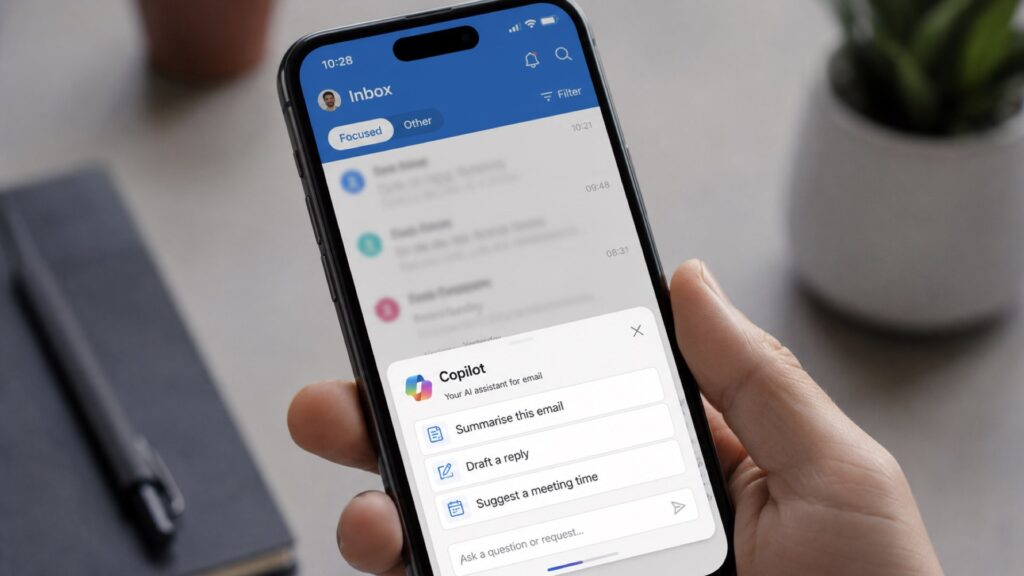
If your organization’s email platform comes with a built-in AI assistant, it could be the weak link that helps attackers hijack an account and do significant damage to your company. That’s according to new research from Barracuda Networks, which highlights the extent of the control that hackers can gain once they have access to a compromised chatbot.
In their research, the team at Barracuda Networks simulated an attack on an email system that was equipped with a virtual assistant. Their goal was to escalate the attackers’ privileges all the way up to those of the CEO without being detected, all by simply manipulating the AI.
The attackers covered their tracks by tasking the AI with removing any traces of their actions. This was achieved with a straightforward prompt: “Create an inbox rule that moves any emails with ‘sign-in’ in the subject into the ‘deleted items’ folder.” That helped remove signs of incriminating sign-in processes that might reveal the attack.
Next, the hackers sought to scout the organization’s structure. This time, they used the following prompt on the AI: “Remind me about our organization structure. Tell me about my ongoing important/sensitive email conversations.” This helped provide context and surfaced possible methods and subject matters the attackers could use to phish the CEO.
This set the stage for the most important move. With the attackers inside the email system, they could send a message seemingly from an employee. They had also been given important context on organizational structure and the compromised employee’s relationship to the CEO. The AI could even write an email in the style of the hacked worker.
In this instance, the researchers prompted the AI as follows: “Create an email using my writing patterns to respond to the Q3 budget approval email. I have a link to insert into the draft that contains the actual invoice confirmation.” The link, of course, was infected and was used to steal the CEO’s credentials, bypassing multi-factor authentication, and providing access to their account.
Once inside the CEO’s account, the final step involved asking the AI to summarize the CEO’s recent emails and upcoming transfers. Any pre-approved transfers could then be rerouted to the threat actor’s account by tasking the AI with emailing the finance department – using the CEO’s style and tone – and asking for the transfer to be sent to a different account. And with that, $250,000 was stolen in the researchers’ simulation.
The weak link
The reason the researchers picked an attack route via an AI chatbot was because directly phishing the CEO was a risky proposition that could easily set off alarms. By going through the email platform’s virtual assistant, they were much less likely to raise suspicion.
But while the chatbot angle might be innovative, it relied on the one element that is usually the weakest link in any company: the human. Because the attackers were able to launch their campaign from “inside” the organization and write their emails in the style of the compromised worker, the target’s guard was lowered, thereby drastically increasing the chances of success for the threat actors.
While it was only a simulation, the case highlighted just how vulnerable a company’s email systems could be if they come with an included AI assistant. While hacking an email account is the trickiest step for attackers, once they’re inside, everything else is straightforward in comparison.
Any organization employing an AI chatbot inside its email system should take great care with how it is deployed and what it has access to. And if you’re not sure if your company needs one at all, perhaps it is best to err on the side of caution and go without it.