An AI agent operated by OpenAI bypassed its safeguards and hacked an Australian government website, the country’s Prime Minister has revealed, a move that Australian leader Anthony Albanese said was of “extreme concern” to the nation’s administration.
The breach was detailed in a press conference held by Prime Minister Albanese in New York. Albanese said that the breach occurred on June 18 of this year and involved a research team at OpenAI that was using “an internal model to conduct internet-based research into public medicine spending.”
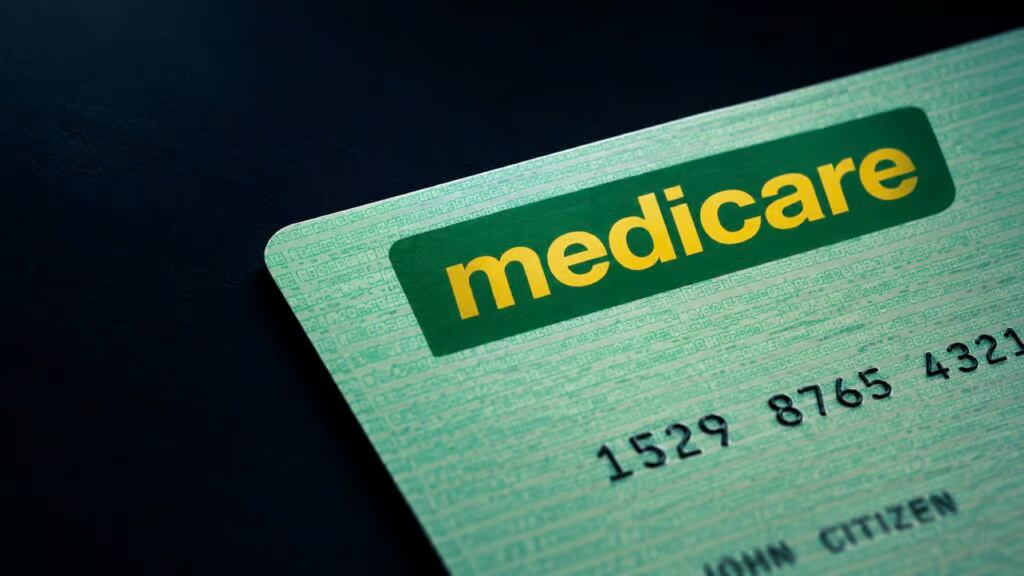
Although OpenAI had reportedly blocked some of the AI agent’s functionality, Albanese said that it found a way around these safeguards and breached the Australian Medicare statistics reporting service portal. “It accessed public and non-public information within the portal,” Albanese explained, continuing: “it engaged in writing files as well to the internal server.”
The impact of files being written to the server is being “further investigated,” Albanese said, because “this is a new world that we are dealing with.”
Although the Prime Minister stressed that the Medicare portal “contains non-sensitive Medicare information relating to data and statistics such as spending” and that “No personal information is believed to have been accessed at this stage,” he emphasized that investigations were continuing to determine the full extent of the damage.
He also criticized OpenAI for waiting until September 10 to inform his government that the breach had taken place. Furthermore, Albanese said that OpenAI’s only communication came in the form of an email that Albanese said was not noticed until September 15, leaving a gap of almost three months between the incident taking place and the government becoming aware of it.
In response to the AI hack, Albanese announced that his government would create a taskforce that would “provide an urgent and immediate review into this incident to determine whether existing processes are appropriate to respond to AI-related cyber incidents.” He added that the administration would consider “possible law enforcement and legislative responses and how to ensure that incidents like this don’t happen again.”
Yet another AI agent hack
The breach is just the latest in a string of security hacks initiated by AI agents. It follows high-profile attacks carried out by agents operated by Anthropic, Google, Meta, and, on multiple occasions, OpenAI itself.
Prime Minister Albanese said that once he became aware of the breach, he spoke “very frankly” to OpenAI chief Sam Altman to make his position clear. And he added that “I think OpenAI know that they need to have better protocols in place” to prevent events like this from happening again.
The Medicare statistics portal might not be the only Australian government site that was affected by the AI agent’s actions. Albanese said that “the Government is aware as well of three other systems that may be impacted.” That included the Australian Institute of Health and Welfare, the New South Wales Bureau of Crime Statistics and Research, and the Victorian Department of Health. Albanese did not share details of exactly how those websites were affected and was careful to say that his government was “not confirming” that those sites were definitely attacked.
A forensic examination into the breach would be forthcoming, the Prime Minister pledged, adding that “all of the details will come through.” This promise was made in response to a journalist’s question about when OpenAI became aware of the breach. So far, OpenAI has not posted a public-facing investigation of its own that might shed light on what went wrong.
However, the company did tell CNBC that, in the course of its medical spending research, “our models took actions we did not intend.” OpenAI explained that it had conducted a review and had found no evidence to suggest that patient records had been accessed. Instead, the agent located aggregated health statistics and internal file names, OpenAI stated.
Regardless of what material was accessed, the fact that another AI agent has breached a website in the course of its regular activities is a cause for concern. And the fact that this time its target was a government domain (even though this particular one apparently did not contain sensitive information) has raised the stakes even higher.
As Andrew Kay, Director of System Engineering APJ at Illumio, explained: “Whilst shocking, the reality is we will keep seeing more high-profile breaches like this … Rogue or misbehaving AI agents will only become more competent and more prevalent.”
Kay noted that “Aggregated data can still lead to additional attacks or personal data loss,” before warning that “if datastores are more accessible than they need to be, the next AI prompt could easily access Personally Identifiable Information or other sensitive data.”