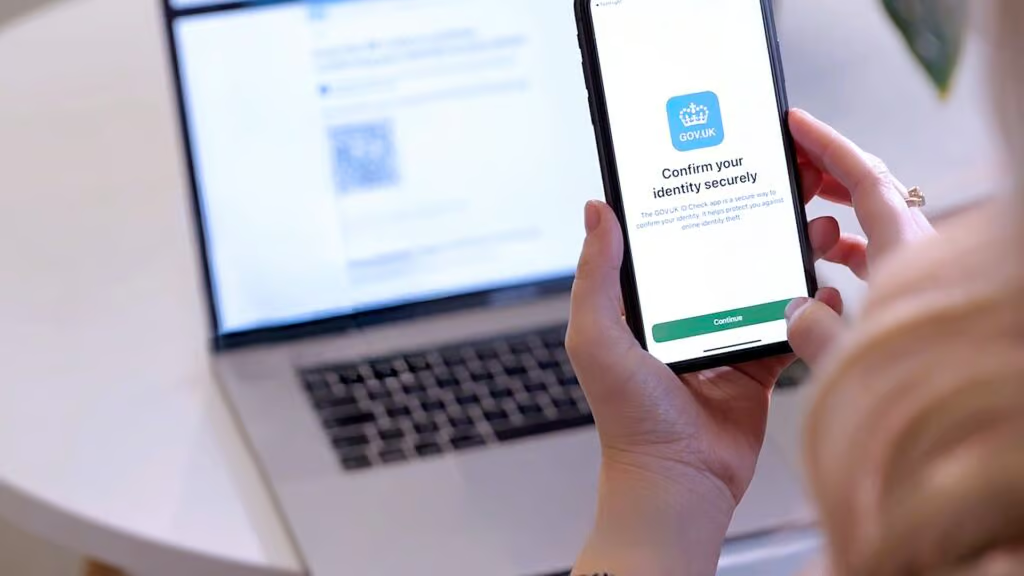
The UK government has rolled out optional passkey logins across government service portals to strengthen cyber defenses.
Passkeys allow users to securely sign in with their fingerprint, Face ID, or PIN instead of a password. The Department for Digital, Culture, Media and Sport (DCMS) said it rolled out the sign-in option on GOV.UK One Login, which allows British users to access childcare, pension, and tax services.
“This is about making government services simpler and safer for everyone, while giving people stronger protection against the fraudsters who target passwords,” Digital Government Minister Stephanie Peacock said.
While the mechanism is optional and users can continue to use passwords, passkeys can strengthen “collective resilience” against cyberattacks, said Jonathon Ellison, director of national resilience at the UK National Cyber Security Centre (NCSC).
The biometric information used to unlock a passkey stays on the user’s device and is not seen or stored by GOV.UK One Login, the government added.
Passkeys are set to benefit at least 23 million users, with 300,000 people having already made the switch to the system, the department said. Nearly one in 10 daily sign-ins are now made using a passkey, saving nearly £600 a day in SMS costs.
Rising phishing threat
The measure from the UK government comes as the country continues to experience a surge in phishing and other cybercrimes. Attackers often use phishing campaigns to steal session cookies from authenticated users.
The NCSC recommends passkeys as a more secure alternative to passwords because they cannot be intercepted, reused, or stolen. The government also said passkey logins are up to eight times faster than signing with a username, password, and two-step verification code.
“We strongly encourage users to set up a passkey for GOV.UK One Login and to do so wherever passkeys are available across digital services,” Ellison said.
Phishing attacks remain the most prevalent and disruptive type of breach in the UK. In the past, phishing attacks tied to nation-state hackers targeted UK lawmakers, health services, and local government services.