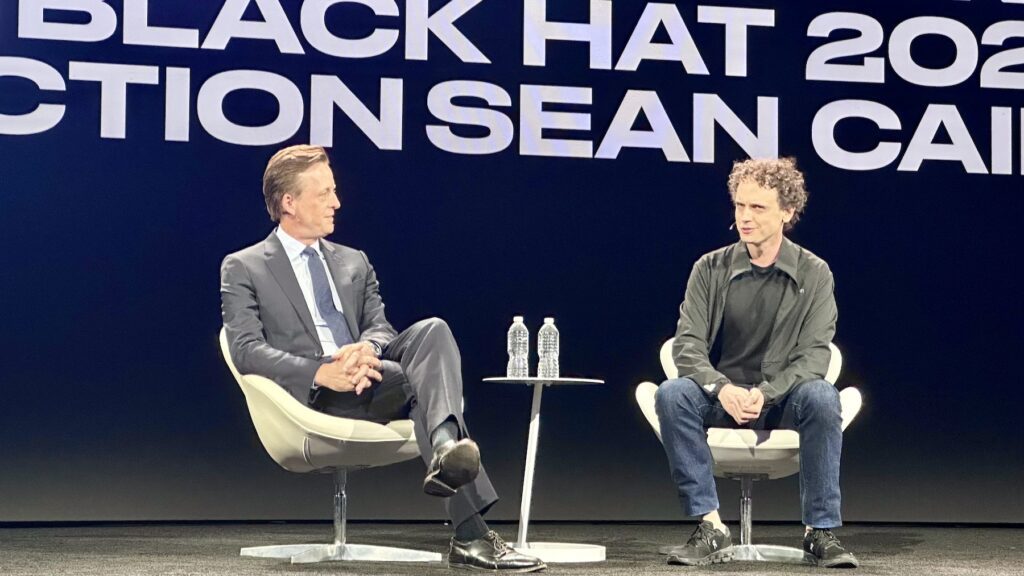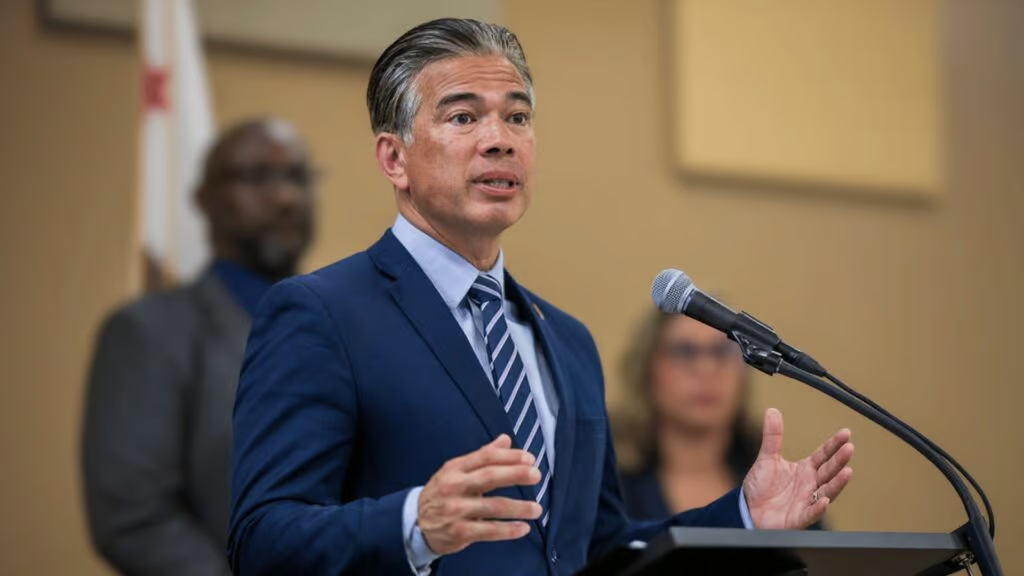

Black Hat 2026 – Senior policy leaders from the White House, Department of Homeland Security (DHS), UK National Cyber Security Center (NCSC), and Canadian Center for Cyber Security have argued cyber policy must be more proactive as AI risks accelerate.
“For the past decade of federal cyber policy, we’ve really been in reactive mode,” Mike Duffy, the US Federal CISO at the White House, told a panel at Black Hat USA on Wednesday.
But in the new era of AI risk, “We can’t wait for the next crisis to happen. We likely won’t have time to pick up the pieces,” he continued.
The panel comes amid fears around the risks of AI models like Anthropic’s Claude Mythos collapsing the window between a vulnerability being discovered and exploited — a shift Five Eyes agencies warned about earlier this year.
At an opening keynote at Black Hat on Tuesday, US National Cyber Director Sean Cairncross argued against the need for strong AI regulation, saying regulation would be out of date within 48 hours.
Building policies to address risk in this rapidly changing landscape raises obvious challenges. This will require more agility and speed in the government sector, Duffy suggests.
“We need to anticipate… We need to quickly identify [challenges], share that information and apply some kind of policy controls,” he told the panel.
Focus on the security essentials
Asked which AI risks are getting too little attention, the panel repeatedly urged the private sector to focus on the unglamorous security fundamentals often ignored.
Jonathon Ellison, Director for National Resilience, UK’s NCSC, said the increasing risk of frontier models is a moment of “a correction” for years of under-investment.
The immediate challenge, he argued, is not agentic AI but the legacy problems organizations are already carrying, now colliding with a faster pace of attack.
Ellison highlighted this is because around 20% of the kit the NCSC sees deployed in the UK is end-of-life or unpatched, and warned the industry has put “too much emphasis on the faster detection of vulnerabilities” when many current vulnerabilities are still not fixed.
Joseph Alm, DHS Assistant Secretary for Cyber, Infrastructure, Risk and Resilience Policy, said organizations have to be ready for compromise. He warned of a multi-year phase in which everyone is vulnerable.
Duffy said it was “a great time to dust off zero-trust playbooks” and to talk about segmentation, so that a failure takes down lower-impact systems rather than the whole enterprise.