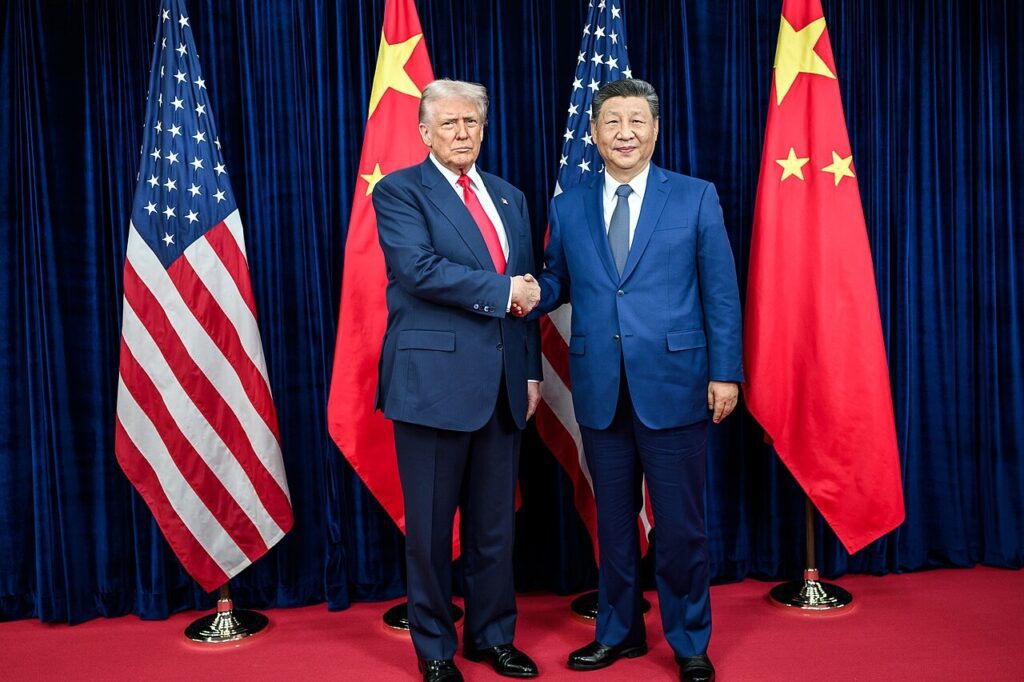
The US government is considering moves to ban Chinese AI models as their enterprise applications surge in the country.
Citing multiple unidentified Trump Administration sources, Axios on Monday reported that some White House officials are backing an outright ban on Chinese AI models.
While the government might not impose a ban, other sources added the US is likely to use the threat of placing AI models on the BIS Entity List (a trade restriction list) as a pressure tactic to prevent competition, as well as run campaigns claiming that the Chinese models are potentially backdoored and pose security concerns.
This news comes after Dean Ball, the head of strategy at OpenAI, as well as a former White House staffer, on Sunday noted that the US Departments of War, Transportation, Energy, Agriculture, Commerce, National Aeronautics and Space Administration, and Congress have blocked their employees from using Chinese AI models.
The move from the government comes in the wake of Beijing-based Moonshot’s release of Kimi K3 open-weight AI model, which is said to be on par with advanced American models such as Anthropic’s Claude Fable and OpenAI’s GPT-5.6. The release of the model, which is estimated to be the most advanced open-weight model available yet, crashed US chip stocks by 12%.
Similar impacts were seen following the release of Beijing-based Zhipu AI’s GLM-5.2 and the DeepSeek R1 reasoning model, leading AI experts to note that the “technical moat,” or capability gap, between American and Chinese models is fast disappearing.
Cognitive scientist and AI expert Gary Marcus observed that the negative impacts tied to Chinese AI model releases are “not surprising” and that the “US would not achieve a decisive victory in AI over China” if American companies continue to fixate on genAI capabilities alone.
Banning Chinese apps will only increase the price of existing models and kill innovation, Marcus said, adding that US government efforts to thwart Chinese competition should instead be more strategic.
“To begin with, Congress ought to investigate. How did the US squander its lead? Were there strategic or tactical errors made? Was going all in on a single technology that could be replicated foolish? Did US companies do enough to protect their IP?” Marcus said.
He added that US companies such as Anthropic and OpenAI should focus on “narrow verticals, or “forward deployment.”
“Google and Microsoft and Amazon aren’t going anywhere, and can provide for US needs, especially classified ones where Chinese models presumably won’t be welcome,” Marcus said.
OpenAI’s Ball, who was the former White House staff drafter of the administration’s AI Action Plan team, has previously called for a “soft law that creates a fear, uncertainty, and doubt,” through measures such as a Federal Reserve Advisory Bulletin or government risk management notice, rather than an outright Chinese application ban.
He argued that an outright ban “could scare off hyperscalers” and “drive startups to sketchier providers.”
Sriram Krishnan, former White House AI advisor, previously noted that the Trump Administration is likely to oppose stringent AI regulations. Speaking to media outlet MTS on Monday, Krishnan acknowledged that Chinese models are equally capable, but added the way forward is to ensure that “American or Western or allies’ defenders have access to the best models.”
“It may be harder to look at your own code for exploits with Fable than it is when you use a Chinese model. That’s just like a weird spot to be, and I think we should fix that.”