The White House on July 14 unveiled an AI cybersecurity initiative for coordinating frontier AI-enabled vulnerability detection and patching across public and private sectors.
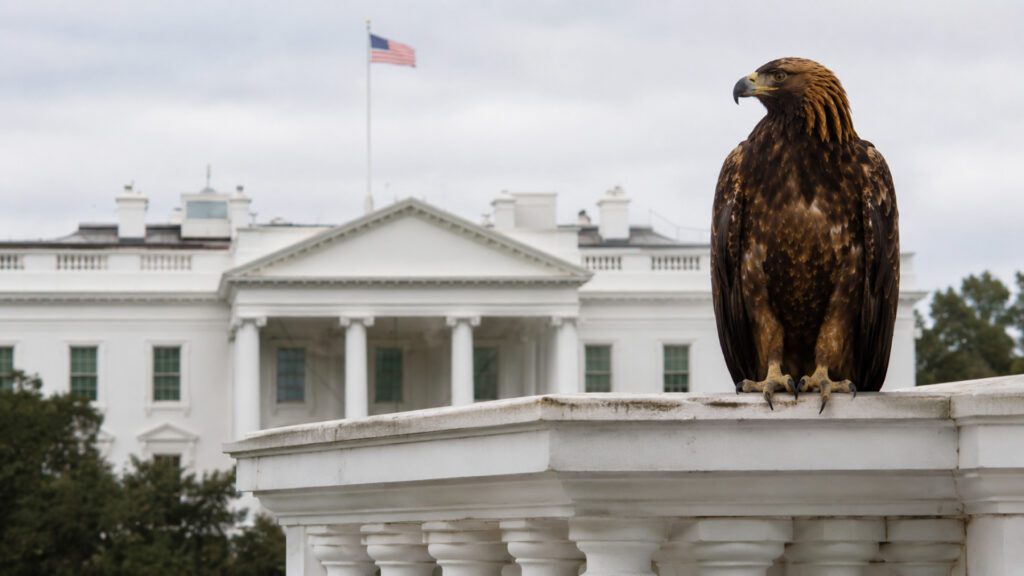
The initiative, called “Gold Eagle,” will act as a “clearinghouse” for national-level vulnerability coordination. The Department of the Treasury will be heading the initiative, alongside the Department of Homeland Security, CISA, and the Department of War, which will work closely with the private sector on vulnerability detection across U.S. critical infrastructure.
“Treasury, along with our partner agencies, will continue to harness frontier AI capabilities to stay ahead of our adversaries and defend people from emerging threats,” said Treasury Secretary Scott Bessent.
The initiative has already begun receiving inputs on vulnerabilities from private and federal agencies, the White House said. Additionally, the Treasury Department and the Department of Homeland Security will work closely with the Software Engineering Institute at Carnegie Mellon University to develop a new platform called the Vulnerability Information and Coordination Environment for third-party updates on AI vulnerabilities.
The initiative builds on a June White House AI Executive Order that called for measures to expedite AI-enabled cybersecurity defenses across National Security Systems after a month. These included measures such as developing a classified benchmarking process to assess the advanced cyber capabilities of AI models, as well as determining the threshold to identify an AI system as a frontier model.
“Through this strategic partnership, we will expand existing security measures to safeguard software and networks in the 21st century and continue to promote advancements in artificial intelligence,” said Markwayne Mullin, Department of Homeland Security Secretary. He added that the government will continue to explore how the initiative can be used to strengthen national security.
The latest announcement comes as the Trump administration continues to assess the disruptive capabilities of cyber-capable models such as Anthropic’s Mythos 5, which has sparked industry concerns over how it could be exploited by threat actors to carry out high-profile cyberattacks.
While the White House imposed an interim exporting ban on Anthropic’s Mythos and Fable 5 models citing security concerns, it soon reversed the decision this month. Last week, CISA disclosed it has been using Mythos for vulnerability detection in government code repositories.
By strengthening critical infrastructure security through responsible AI adoption, the Trump administration primarily seeks to ensure that American companies continue to remain global leaders in AI.
Chinese AI models, such as the newly released Zhipu AI’s GLM-5.2, have ranked highly in terms of capabilities, and their releases have sent shockwaves across U.S. AI stock markets.
With the narrowing AI capabilities gap, Chinese and American AI sectors have increasingly collided over accusations of spying and intellectual property theft.