Microsoft on Monday announced a new “cost-effective” multi-model agentic AI system for security defenders.
MAI-Cyber-1-Flash is a reasoning model designed to detect vulnerabilities from codebases. Microsoft has combined the model with MDASH, a vulnerability identification and remediation harness that the company first announced in May.
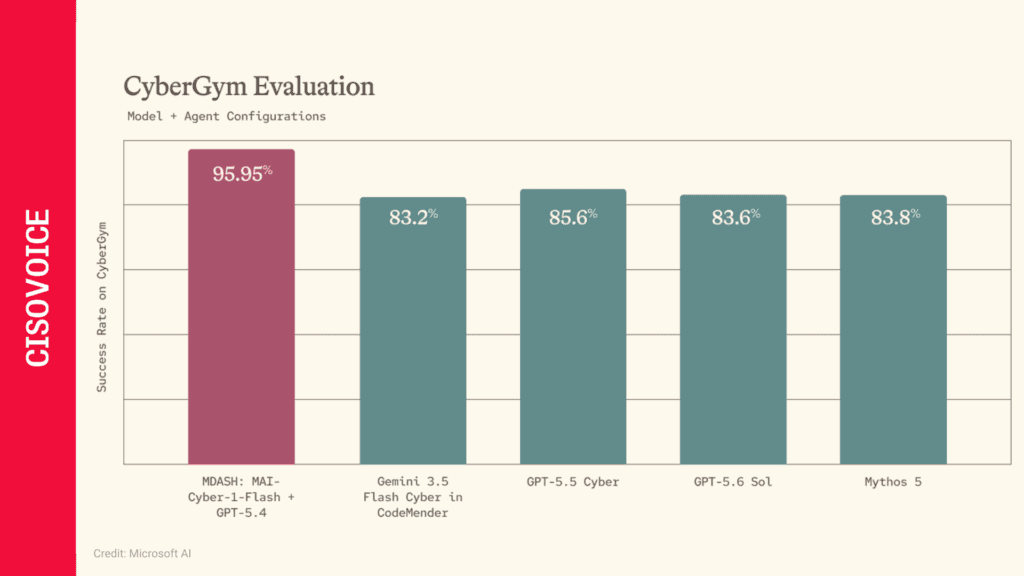
According to the CyberGym benchmark, MAI-Cyber-1-Flash outperforms Anthropic’s frontier Mythos model at half of the cost of Microsoft’s previous offering. The company will release the multi-model system on August 3.
“By combining specialized models and data with the right agents, tools, security context, and harness, we can advance the frontier of cost to outcome,” Microsoft CEO Satya Nadella said.
The latest multi-model system has been released as part of Microsoft’s new initiative, Project Perception, which seeks to develop the next generation of cyber models by learning from real-time data across identities, endpoints, applications, data, clouds, and AI systems, turning them into actionable insights.
“The defining characteristic of the next generation of security systems will not be their ability to generate more alerts. It will be their ability to continuously perceive, reason and act,” the company said.
With attackers making significant progress in exploit generation, these multi-model agents can help defenders “keep pace” with “machine-speed attacks,” Microsoft said. MAI-Cyber-1-Flash is built on Microsoft’s custom MAI-Thinking-1 lineage, the company’s first-ever model to use hill-climbing learning, a live reinforcement loop that is trained on Microsoft’s 100 trillion daily signals and 1.6 million customers’ operational insights.
Through reinforcement learning, rather than forcing their models to continuously gather, correlate, and reconstruct context from raw signals, the latest models are given token-efficient access to the information they need to reason about, Microsoft added.
Cyber-capable models advance across the board
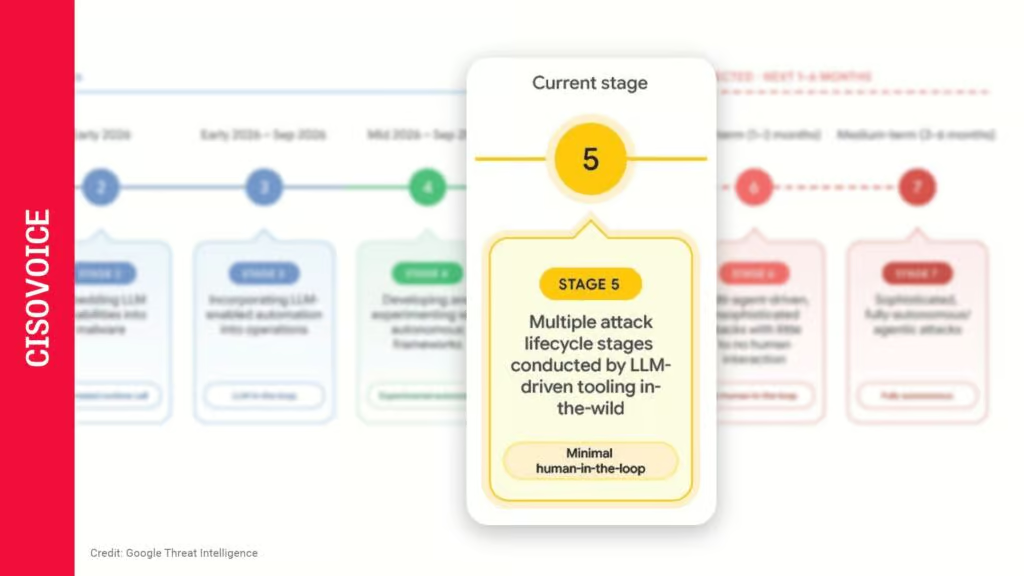
The announcement comes as cyber-capable models advance rapidly. Last week, ChatGPT-maker OpenAI claimed its AI models were behind the recent hack of AI platform Hugging Face.
These developments have raised concerns among industry leaders and lawmakers who worry that hackers could exploit their capabilities to carry out disruptive hacks. On Monday, Microsoft was among 35 companies that joined Nvidia’s Open Secure AI Alliance, to build and share open-source AI security tools, models, and frameworks for cyber defense.
“Defenders need both frontier closed models and frontier open models, working together, so they can choose the right system for the job and ensure that transparency, adaptation and sovereign control are available wherever security demands them,” the alliance said.